
Hello, Everyone-
It has been a little while since we’ve shared a post here, and this week feels like the right time to reconnect. Our community has been facing some difficult days following the recent heavy rains and flooding, and our hearts go out to everyone who has been affected.
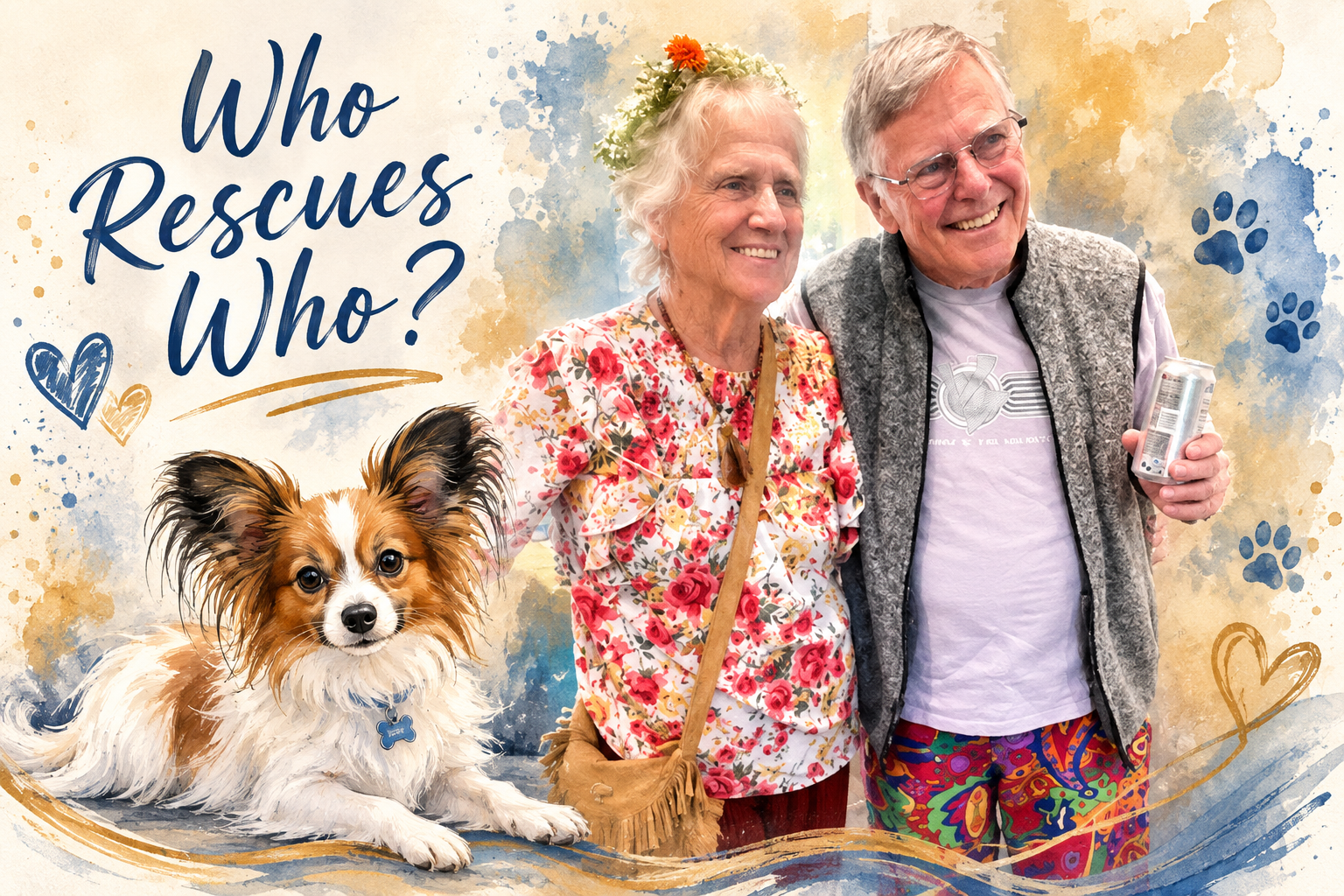
As we share this story, “Who Saves Who?”, it is also a reminder of the power of connection, compassion, and simply being there for one another. TTR Networking is more than a place to grow businesses—it is a community of people who care. If you or someone you know has been affected and needs help, resources, connections, or simply someone to reach out to, please let us know. We may not have all the answers, but together, we may be able to make a difference.
Who Saves Who? By Sue Biddle, Autor of Because I Asked…
(This just happens to be Sue’s birthday)
Over the past few months, I have thought quite a bit about people who rescue animals—what motivates them and how they choose the animals (or do the animals choose them)?
My husband, Wes, and I have rescued at least one animal. After our much-loved older papillon, Timmy, passed away several years ago, we were approached by a friend whose daughter had rescued a dog but couldn’t keep him. This dog, our friend said, might also be a papillon and needed a home. We weren’t entirely sure we wanted or were ready for another dog so soon after losing Timmy, but decided to meet the daughter and the dog in need of a new home. Milo, as he was named, was definitely not a papillon and looked pretty rough when we met him. His hair was matted (we later discovered he was actually a Pomeranian and required regular grooming) and looked like he had lived a rough life for a ten-pound dog. Despite this, and the fact that he barked and growled at us, we decided that he needed us and maybe we also needed him.
A visit to the vet determined that Milo had a broken jaw and many missing teeth and, rather than being three or four as we had been told, was more likely at least ten or twelve. Many hundreds of dollars in vet and grooming bills later, Milo settled into our home and our lives. For the last year of his life, Milo was a lovably grouchy member of our family. He fiercely defended our house from any potential intruders, including our children and grandchildren, one of whom remarked “He’s a weirdo but Grandma and Grandpa really love that little freak,” after Milo attempted to bite him during a visit. Fortunately for our grandson, Milo had no teeth and never posed a threat. When he died in his sleep just over twelve months later, Wes and I realized that he had actually rescued us from our grief over Timmy and gave us a lifelong appreciation for rescue animals.
Despite my own experiences, I had not realized that there were people who rescue animals as a way of life. Then, I got to know Aggie, the owner of a local antique shop known as the Old Shop. While looking for a quilt rack for my church to use to display its quilts, I was recently enjoying a visit with two friends. As I browsed through the crowded aisles, I was stopped short by a 10 x 10 canvas painting of two goats in a wading pool filled with goldfish seeming to swim happily in circles. One goat stood on the back of the other, which seemed odd to me, so I asked Aggie Deaks, the owner of the shop who I knew lived on a small farm nearby if all of the animals on her farm were that athletic. Laughing, Aggie said, “Well, all of them are special in their own ways, but some play games like Hide and Seek.” Hesitating briefly, she continued, “And most of the animals who live at Deaks Farm do talk. Frequently, in fact!”
After hearing about the talking animals on Deaks Farm, I decided to try my hand at writing a children’s story about them–and about Aggie and Jamie, the humans who rescued these amazing animals and gave them all a home. That story is not yet finished, but in the process of writing it, I discovered that rescuing an animal is not as simple as it may appear. Talking with Aggie over the course of the past year helped me to identify some guidelines to keep in mind if you are thinking of rescuing an animal:
Aggie’s Simple Rules for Successful Pet Rescues
- Make certain that all family members who live in the home feel the same about animals.
- Before adopting a pet, learn all that you can about the breed (if known) including potential health issues, behaviors, and feeding requirements.
- Be aware that the animal you are thinking of rescuing may have been mistreated and will need special handling to overcome the trauma they have experienced.
- Be cautious about adopting an animal that might consider current family pets to be its “mortal enemies.”
- Never rescue an animal if you aren’t certain that you will be able to keep it. Rescue animals have already been rejected at least once and require security. Try a lot of snuggling!
- Talk to friends or acquaintances who have successfully rescued animals. Most likely they will say it has been good for their souls but also can help you to prepare for obstacles you may encounter and provide helpful tips for success.